

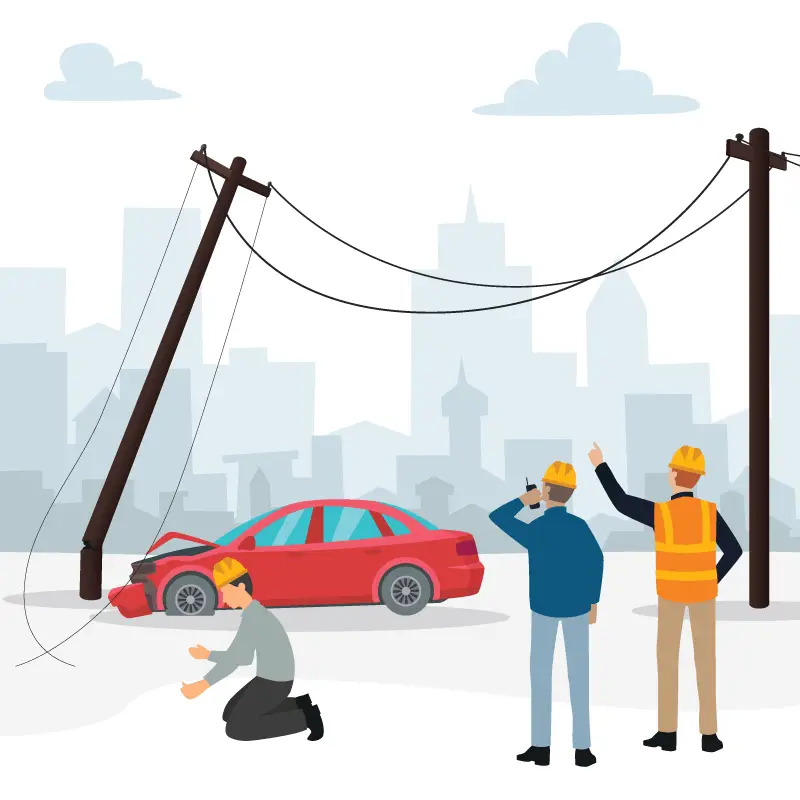
Assess the situation
Tipmont personnel is notified of a broken pole. This can come from Tipmont's own monitoring system, a county sheriff's department or cooperative members. Lineworkers will visit the pole and assess the damage. This may take 30 minutes to an hour depending on the location and whether the notification comes outside of normal business hours.
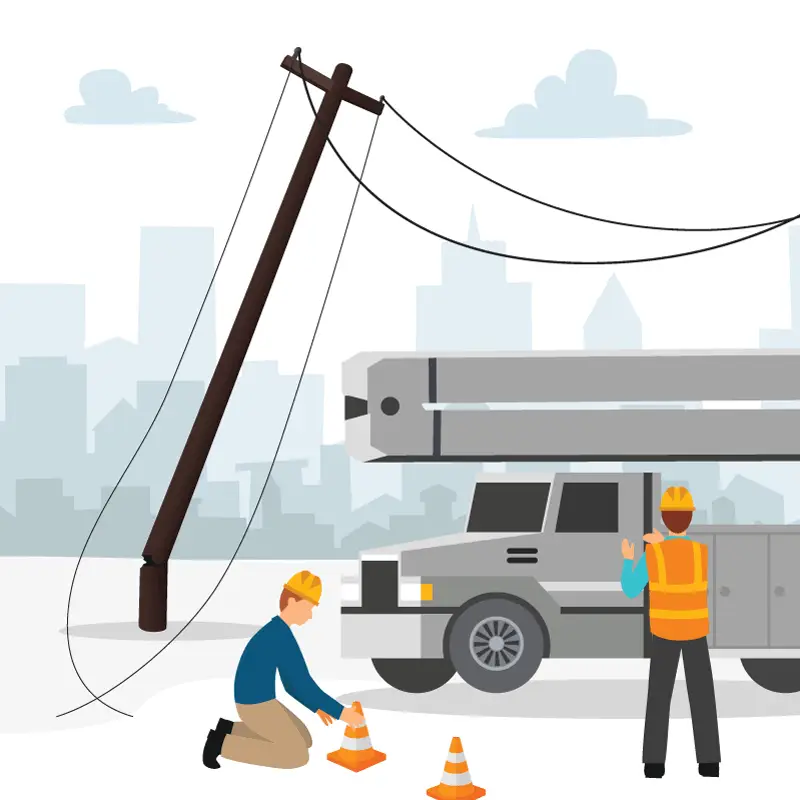
Secure the scene and call in a crew
If the pole needs to be replaced, Tipmont lineworkers on the scene will first ensure the scene is safe. They'll de-energize the line following established safety procedures. Next, they will call for a crew of three to four others to come with a bucket truck and a digger truck.
In many cases, resetting or replacing a pole also requires calling into 811 — the Indiana “call before you dig” service — before crews can dig new holes. This is required to locate other buried utilities along the right-of-way and can add time to the restoration.

Obtain supplies and tools
Tipmont's original responding lineworkers will work on what can be done until the additional crews arrive with a new pole and replacement equipment. Depending on the weather and the proximity of the broken pole to the replacement pole and equipment, this may take one to two hours.
Replace the damaged pole
When all crew members are present, they begin setting a new pole and will work to safely restore power to Tipmont members as quickly as possible.
This includes removing equipment from the broken pole and attaching the necessary equipment to the new pole. Depending on the location, the equipment needed on each pole will vary. Poles are generally buried around six feet in the ground. The buried part of the broken pole is usually pulled out with the hydraulic lift on a truck. Sometimes it’s necessary to dig a new hole. Dirt is backfilled and tamped down with hydraulic equipment. The power lines are then lifted back into place and mounted on the new insulators. Once all is back in place, the protective gear is removed and an all-clear is given, the power is turned back on.
Sometimes it’s possible during the pole replacement process to redirect power to those affected by the outage. It is Tipmont's goal to safely retore power to as many consumers as quickly as possible. The average pole replacement could take three to four hours under favorable conditions with no mitigating circumstances — or longer if unforeseen circumstances slow the crew down.